
 Huisly
How Dutch Social Housing Works and Why Access Takes Time
Understand Dutch social housing, regional allocation, registration time, lotteries, income and household rules, urgency, middle rent, and parallel search options.

Dutch social housing is designed to provide regulated homes under allocation and affordability rules, but it is not one national queue. Housing associations operate within regional systems, municipalities set housing-allocation rules, and individual homes can use registration time, search points, lotteries, urgent priority, local binding, or target-group criteria.
That complexity is why “the waiting list is X years” is rarely a useful national answer. Access depends on the region, home, household, and allocation method.
What Counts as Social Housing
Many social homes are owned by housing associations, but legal rent classification depends on the accommodation, initial rent, WWS points, and applicable date, not ownership alone.
Housing associations have statutory tasks and allocation obligations. They also offer some middle-rent or free-sector homes under different criteria. Read the label and contract for the specific property.
Why Demand Exceeds Available Offers
Pressure comes from several interacting factors:
- limited construction and turnover;
- household growth and changing household size;
- affordability pressure in private rent and ownership;
- demolition, renovation, and temporary displacement;
- regional job, study, care, and family needs;
- homes reserved for particular household or accessibility needs;
- existing tenants remaining in suitable secure homes.
Avoid blaming one group. Local supply and allocation data are more useful than a national slogan.
Registration Is Usually Only the Beginning
Depending on the region, registration can build time or simply create an account. You may still need to respond to individual homes and meet their conditions.
Record:
- registration and renewal date;
- subscription fee and payment proof;
- regional coverage;
- allocation models;
- response and refusal consequences;
- profile fields and document requirements;
- rules for relationship or household changes;
- transfer or restoration options.
Set reminders. Losing a long-held registration through an avoidable lapse can be costly.
Allocation Methods Differ
Registration or Search Time
Ranking may depend on how long an account has existed or how actively someone searches. The precise formula belongs to the regional policy.
Lottery
Eligible applicants can have a chance independent of long registration, but the probability varies with applicants and rules.
Priority or Target Group
Homes may prioritise age, household size, accessibility, local connection, occupation, move-on schemes, or another published group.
Direct or First Response
Some offers use another order or matching method. Read the listing instead of assuming speed always wins.
Income and Household Matching
Associations apply current statutory and provider rules to allocate appropriate rents to household income and composition. Thresholds are indexed and can have categories or exceptions.
Do not use an old single-person euro amount. Check the current listing and policy, including which income year, household members, and evidence count. Report changes honestly.
International Residents
International residents may apply when they meet residence, registration, income, household, and regional requirements. A BSN alone does not prove every criterion, while nationality alone does not exclude someone.
Check whether the portal requires a housing permit, local connection, residence document, BRP extract, or income statement. Use official support when a document from abroad does not fit the standard process.
Historical Wait Data Needs Context
Portal statistics may show the registration time or number of responses for a previously allocated home. Use them to compare similar offers, not predict an exact date.
A family house in a popular district, an accessible senior home, and a lottery studio have different applicant pools. Selection can also be affected by refusals, priority, and document verification.
Urgency Is a Separate Local Route
Municipal or regional urgency rules define emergencies, evidence, exclusions, search area, and the solution offered. General housing need, high rent, divorce, pregnancy, or contract expiry does not automatically produce priority.
Read the current regulation and seek help early for safety, health, homelessness, or domestic violence. Do not pay a commercial service that guarantees an urgency declaration.
Regulated Middle Rent
Middle-rent homes can provide another regulated segment. WWS points, initial rent, and contract date matter. Providers can also impose income bands, household matching, local priority, project registration, or lottery.
Monitor associations, municipalities, developers, and institutional providers. A marketing label does not replace the current legal calculation.
Private Rent as a Parallel Search
Private rent can offer different availability but often involves higher cost and provider-specific screening. Calculate basic rent, service costs, energy, travel, deposit, furnishing, and indexation.
Huisly helps search current listings, use list and viewport map views, review available property context and source links, bookmark active listings, and create mobile alerts. Free supports one alert with one location; Premium supports up to three alerts with up to ten locations each and instant high-priority notifications after detection.
It does not cover every social or specialist portal and cannot guarantee delivery or selection. Keep regional registrations and relevant direct channels active.
Sharing and Temporary Options
Sharing can reduce cost only when landlord consent, contract, municipal occupancy, fire-safety, and registration rules permit it. Confirm each occupant and liability in writing.
Anti-squat or guardianship arrangements can offer temporary use with different protection and notice. Short stay can add furnishing and flexibility at a higher total cost. Neither is a substitute for understanding the legal agreement and exit plan.
Improve the Long-Term Search
- maintain registrations in every genuinely workable region;
- compare historical allocation for similar homes;
- respond consistently within the rules;
- keep profile and documents current;
- include locations connected to real daily journeys;
- use lottery and target-group offers where eligible;
- check middle-rent projects;
- maintain a safe private-market plan;
- seek early support when current housing is at risk.
What Not to Do
- do not buy or trade a registration account;
- do not falsify household, income, or residence;
- do not pay someone promising queue priority;
- do not let a registration lapse unintentionally;
- do not assume a correspondence address creates housing rights;
- do not place all immediate plans on one estimated wait.
Two-Horizon Plan
Social housing can be a valuable long-term route, while another legitimate arrangement meets the current need. Keep both plans financially and administratively visible.
Our guide on what to do while waiting compares urgency, middle rent, sharing, temporary options, and private search in more detail.
The system is difficult because available homes, affordability, and household needs do not align quickly. Understanding the exact regional allocation method is more useful than memorising a citywide waiting-time headline.
Put this guide into practice
Use Huisly after reading “How Dutch Social Housing Works and Why Access Takes Time”
Use one search flow to build a focused shortlist, compare the available original sources, and keep important checks with the provider before you apply.
1,400+ providers in one search
Huisly crawls more than 1,400 property providers every minute. Search their current homes by location, price, property type, size, rooms, furnishing, energy label, construction year, and supported listing criteria.
List when you know where, map when you explore
Choose one location for a focused list or search the visible map area when streets and neighbourhoods matter more than city limits.
Property context and original sources
Review permanent property information, listing history, and the active sources available through Huisly before continuing on the provider's website.
Start free, upgrade for speed
Free includes 1 alert for 1 location. Premium supports 3 alerts, up to 10 locations per alert, and instant high-priority mobile notifications.
Related articles
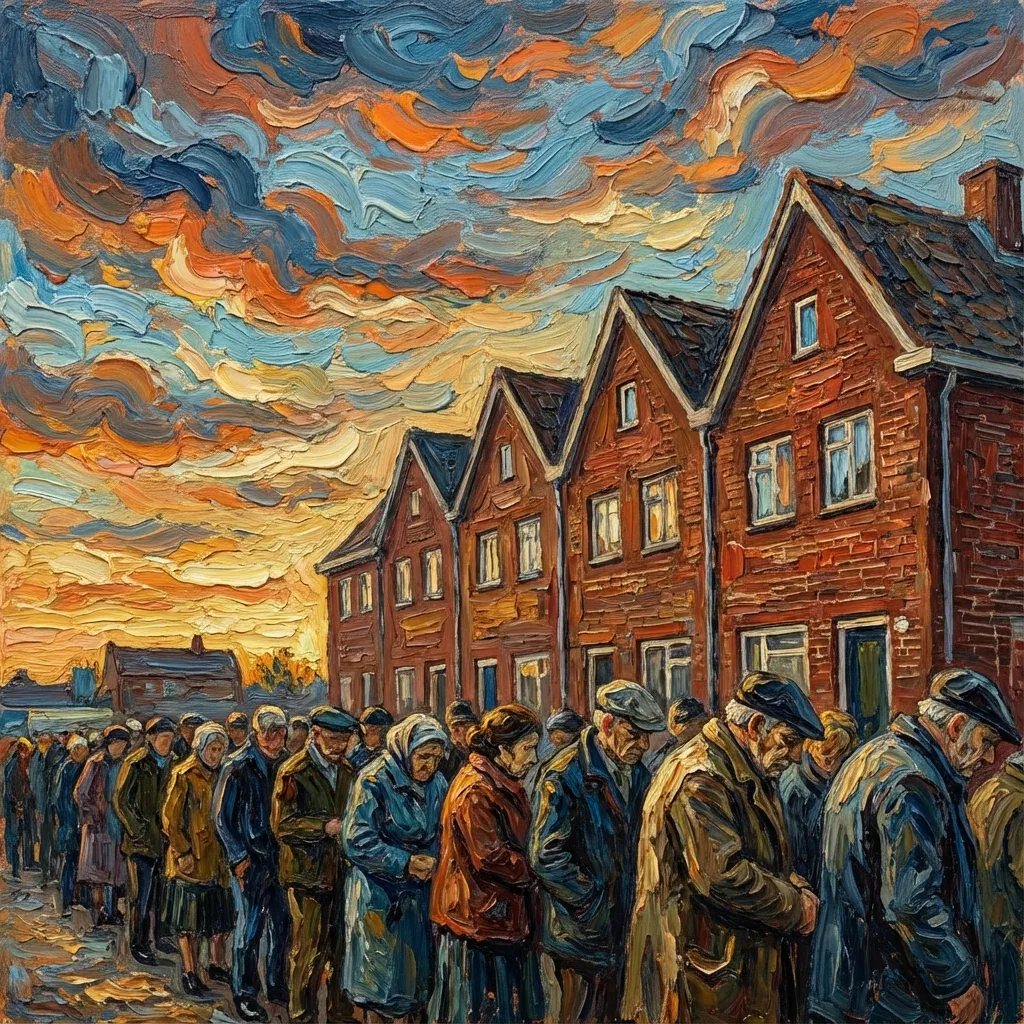
What to Do While Waiting for Dutch Social Housing
A practical plan for people waiting for Dutch social housing: protect registration, understand allocation, check urgency rules, compare middle-rent and private options, and avoid unsafe shortcuts.
 Lotte Bakker
Moving to the Netherlands: A Practical 2026 Relocation Checklist
Plan a move to the Netherlands in the right order: immigration, housing, BRP or RNI registration, insurance, banking, DigiD, utilities, and first-week checks.
Lotte Bakker